
Oluchi Okwuidegbe wrote
If Your Best Employee Resigns Tomorrow, What Happens to Their Knowledge?
on August 25, 2026 in Business
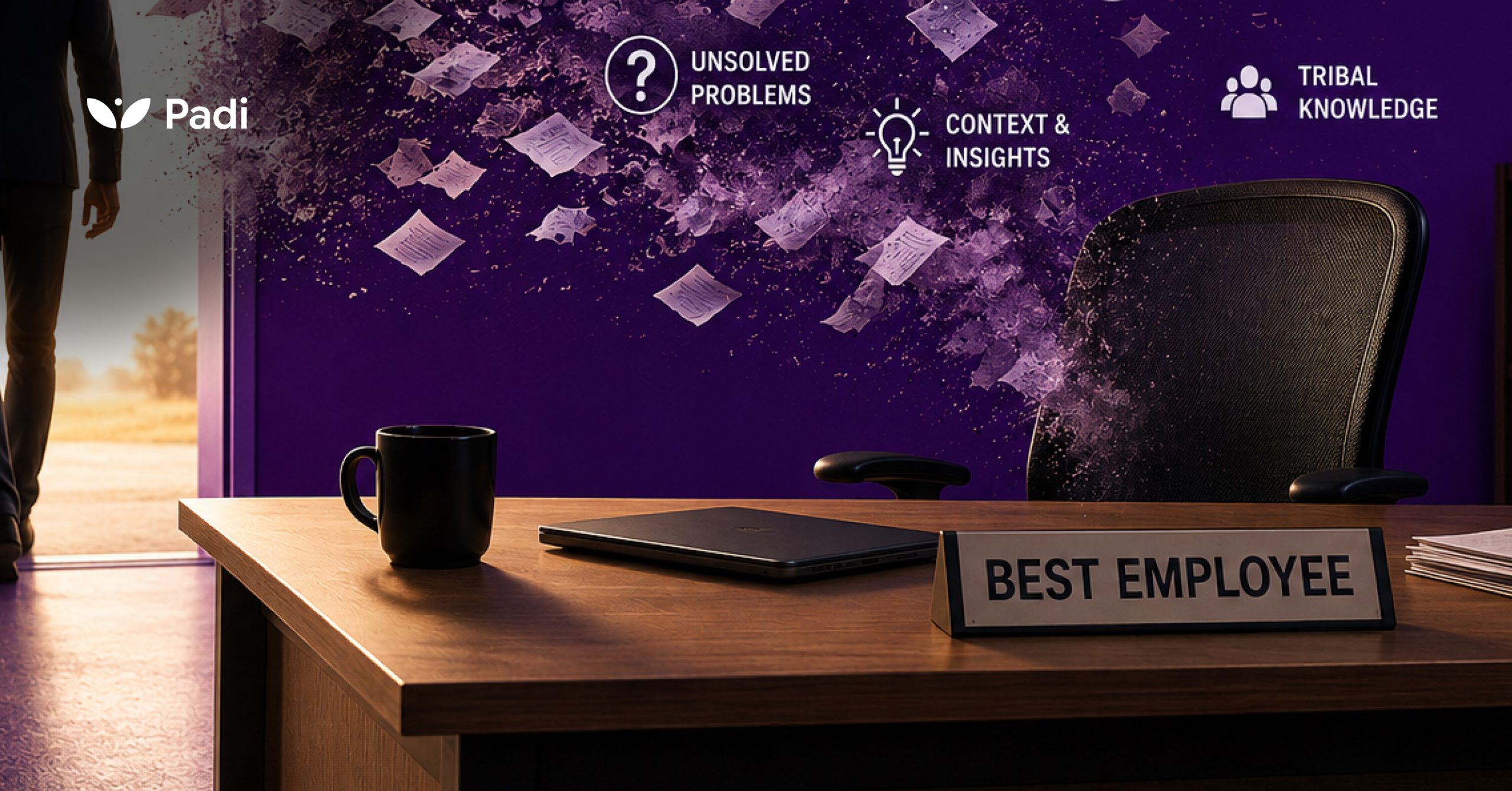
Your employee can leave your company. Their knowledge shouldn’t have to leave with them.
At 4:36 p.m. on a Thursday, Daniel sent his resignation letter.
His manager read it three times, not because Daniel was impossible to replace. But because Daniel knew how everything worked.
He knew which supplier to call when an urgent order came in. He knew how to handle the company’s most difficult client. He knew the little process nobody had bothered to document. He knew where important files were kept. He knew the steps to resolve a recurring operational problem. He even knew the unofficial workaround for a system issue that had frustrated everyone for months.
When Daniel left, he didn’t just take his laptop and personal belongings. He took years of accumulated knowledge with him.
Suddenly, the company discovered something uncomfortable: Daniel wasn’t just an employee. He had become the company’s memory.
The employee who knows everything is a business risk.
This happens more often than business owners realize.
There is always that person; the one who has been around the longest, the one everyone calls when there is a problem.
“Ask Sarah. She knows how we do it.”
“Call David. He handled this last time.”
“Chiamaka knows where the document is.”
“Just ask John. He knows the client.”
It feels like an advantage until that person is unavailable.They go on leave, get sick, relocate, resign or, worse, they leave suddenly. Now everyone is asking: “How did they do this?” and nobody knows because the process was never written down.
Your business may have undocumented intellectual property
Think about everything your employees learn while working for you.
How to onboard a new customer.
How to process a particular order.
How to respond to certain complaints.
How to prepare a report.
How to use an internal system.
How to handle a particular supplier.
How to follow an internal procedure.
How to solve recurring problems.
How to perform tasks that aren’t obvious from a job description.
Over time, these become part of your company’s institutional knowledge. But if that knowledge exists only in someone’s head, it isn’t really part of your business yet. It is dependent on a person and that is dangerous.
What happens when knowledge isn’t documented?
A new employee joins. Instead of finding a clear process, they ask someone. That person explains it verbally. The new employee remembers some of it.
Six months later, they train another person. Now, the process has changed slightly. Someone adds their own interpretation, another person does something differently. Eventually, you have five employees doing the same task five different ways. Nobody can tell you which process is actually correct.
This is how operational inconsistency begins becomes expensive.
You waste time retraining people, employees make avoidable mistakes, managers repeatedly answer the same questions, customers experience inconsistent service, the founder gets pulled into problems that shouldn’t require their attention all because the business never stopped to document what it already knew.
A business should be bigger than the people inside it
Your employees are valuable. Their experience is valuable. Their knowledge is valuable. But your business should capture that value and turn it into organizational knowledge.
That is what good documentation does.
It transforms: “Ask Sarah.”
into: “Here is the process.”
It transforms: “John knows how to do it.”
into:”Here is the procedure John follows.”
It transforms individual experience into something the entire organization can learn from. That is how businesses become less dependent on individuals and more dependent on systems.
This is where Padi Team App comes in
Padi Team App gives businesses a centralized place to organize important company information; your official policies, procedures, guidelines, employee information, important company documents and operational knowledge.
Instead of having critical information scattered across WhatsApp chats, personal laptops, email threads, notebooks, and individual employees’ memories, you can create a structured organizational environment where the right information has a home.
This matters beyond convenience. It creates continuity.
When someone leaves, the next person doesn’t have to start from zero. When someone joins, they have somewhere to learn from. When a manager is unavailable, the process doesn’t have to stop.
When the founder steps away, the company doesn’t suddenly lose its memory.
Ask yourself this uncomfortable question:
If your best employee resigned tomorrow, how much of what they know would disappear with them?
Would you know:
- Where their important work documents are?
- How they handle their core responsibilities?
- Which processes they follow?
- What policies guide their decisions?
- Which clients or operations require special attention?
- How to train the person replacing them?
If the answer is “I am not sure,” you have a documentation problem. And documentation problems become continuity problems.
Build a business that remembers
Your employees will come and go.That is normal.
People grow, change careers, relocate, retire and resign.
A healthy business should be able to survive these transitions without losing the knowledge that keeps it running.
The goal isn’t to make employees replaceable but to make knowledge transferable. That is what creates resilient businesses.
Your best employee should leave with great memories, valuable experience, and the confidence that they made an impact. But they shouldn’t leave with the company’s entire operating manual in their head.
Don’t let your business knowledge walk out the door with your employees. Bring your documents, policies, procedures and workforce information into one organized system with Padi Team App.
Build a company that doesn’t just have good people.
Build one that knows how to retain what those good people know.
Try the Padi Team App now! : https://trypadi.com